
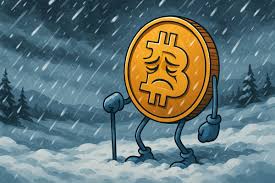
Bitcoin Faithful Prepare for a Harsh Winter
A New Season of Resilience for the Crypto Community
The Bitcoin community—known for its deep conviction and resistance to panic—is once again gathering around a familiar question: Are we heading into another crypto winter? Although cryptocurrency markets have matured significantly, volatility remains firmly embedded in the sector, and several macro indicators suggest that a challenging season may be ahead. Investors, developers, miners, and institutions are evaluating scenarios that could reshape the landscape, testing the resilience of even the most dedicated Bitcoin supporters.
This article offers a clear, engaging, and comprehensive overview tailored for intermediate readers who want to understand the mechanics behind the anticipated downturn. From global economic pressures to mining challenges, regulatory shifts, and the psychology of long-term holders, we explore how Bitcoin believers are preparing for what may be one of the most defining periods of the decade.
Bitcoin has traveled a long path from niche experiment to globally recognized digital asset. Yet its volatility has never fully faded. Unlike previous cycles where sudden declines caught much of the community off guard, today’s environment reflects a more informed, better organized, and more technically prepared ecosystem. However, greater maturity does not eliminate risk: a severe winter can still bring powerful corrections and test the resolve of even seasoned investors.
Those who consider themselves true Bitcoin faithful—often called “holders” or the meme-famous “hodlers”—view winter not just as a drop in price, but as a test of conviction. In crypto’s most difficult periods, the community tends to become tighter, the noise decreases, and long-term strategies take center stage. Historically, these periods have shaped the investors who later benefit the most from market recoveries.
Below, we break down why many believe a tough winter is coming and how the community is strategically preparing.
The Macro Landscape Signaling a Potential Crypto Winter

Talk of a crypto winter usually intensifies when multiple market signals point toward cooling momentum: declining trading volume, extended corrections, institutional outflows, and heightened regulatory action. Currently, several of these conditions are emerging simultaneously, raising concerns among analysts and long-time Bitcoin supporters.
One major factor is macro-economic pressure. Persistent inflation, elevated interest rates, and economic slowdown in various regions create a risk-averse environment. In such scenarios, investors tend to pull back from highly volatile assets, and Bitcoin—despite being labeled “digital gold”—still behaves closer to a risk asset during global uncertainty.
Regulation is another strong contributor. Governments worldwide, including the United States, the European Union, and major emerging economies, have tightened oversight over cryptocurrency markets. Topics such as exchange compliance, stablecoin supervision, consumer protection, and tax transparency are gaining emphasis. While regulation may benefit long-term legitimacy, it often causes short-term capital flight as investors wait for clearer rules.
Mining, a core component of Bitcoin’s structure, is also under pressure. Rising energy costs, environmental scrutiny, competitive difficulty levels, and the need for constant hardware upgrades create narrow margins for miners. A prolonged winter could force smaller mining operations to shut down, reshaping the network’s geographic and economic distribution.
Despite these pressures, the ecosystem is better positioned than in past cycles. Holders are more disciplined, exchanges are more regulated, custodial solutions are safer, and developers are actively improving network efficiency. Yet the upcoming winter—if it fully materializes—will still be demanding, especially for newer investors who have yet to experience a deep bear market.
How Bitcoin Holders Prepare for a Harsh Season

The strategies adopted by Bitcoin faithful combine education, discipline, and long-term analysis. For many, winter is less about price action and more about strengthening fundamentals.
1. Reinforcing their long-term thesis
Experienced holders revisit Bitcoin’s historical cycles, halving events, adoption metrics, and long-term scarcity model. They rely on concrete data rather than emotional reactions. Even when the market declines, the network continues to grow, adoption spreads, and technological upgrades persist. These fundamentals fuel long-term confidence.
2. Adjusting exposure to risk
Preparing for winter means avoiding overexposure. Many reduce leverage, diversify their portfolios, and maintain liquidity to capitalize on potential price dips. Strategic positioning becomes essential as volatility increases.
3. Strengthening custody and security practices
Crypto winters are notorious for hacks, scams, and poorly managed platforms collapsing. As a precaution, holders move assets into cold storage, update security credentials, and stick to reputable platforms with strong track records.
4. Miners optimize their operations
Mining during winter becomes a survival challenge. Well-prepared miners renegotiate energy contracts, upgrade to more efficient ASICs, relocate to cheaper or renewable-energy regions, and join stable mining pools. Those unable to adapt face significant risk.
5. Consuming signal, ignoring noise
Bear markets attract sensational headlines, fear-based narratives, and misleading speculation. Savvy holders focus on on-chain analytics, developer updates, and credible financial research rather than social media panic.
Internal Network Signals That Maintain Optimism
Even during periods of price decline, the Bitcoin network offers reliable indicators of underlying strength. These include:
- Hashrate levels, showing whether miners continue to support the network.
- Active address count, reflecting genuine user engagement.
- Daily transaction volume and fee patterns, displaying network activity.
- Long-term holder supply, showing the percentage of BTC held for over a year.
Many analysts highlight that these metrics often remain stable—or even grow—during downturns. For faithful holders, this signals resilience and long-term viability.
Why a Crypto Winter Can Be a Net Positive for Bitcoin

While a crypto winter can be stressful, history shows it often brings some of the most significant progress. When hype disappears, focus returns to innovation and sustainability. Weak projects collapse, while strong ones sharpen their foundations.
This period typically fuels:
- Major improvements in scalability solutions
- Stronger security protocols
- Growth in second-layer technologies like the Lightning Network
- Enhanced wallet usability
- Quiet but steady institutional accumulation
Winter also resets market valuations, creating healthier setups for future cycles. It invites newcomers at more accessible prices, which later fuels stronger bull markets.
What to Expect for 2025 and Beyond
Even if Bitcoin enters a harsh winter, many long-term bullish factors remain active. Key elements that could shape the asset’s future include:
- The impact of the next halving and reduced supply issuance
- Steadily increasing institutional participation
- Regulatory clarity in major financial regions
- Integration of Bitcoin into traditional payment and financial systems
- Adoption in countries facing high inflation or unstable currencies
A winter may slow the pace of growth, but it does not halt the long-term trajectory of Bitcoin adoption. As history suggests, winters eventually give way to renewed cycles of expansion.
Conclusion: Winter Isn’t Defeat—It’s a Phase
Bitcoin faithful prepare for a harsh winter not because they expect collapse, but because they understand the cyclical nature of the crypto market. They know downturns test discipline, refine strategies, and strengthen the foundations of the ecosystem. While outsiders may interpret winter as crisis, insiders view it as part of Bitcoin’s maturation, a necessary chapter in its evolution.
The community expects challenges, but also opportunities. And if history is any guide, winters are often followed by stronger recoveries and new waves of global adoption.