Tokenized Assets Revolution: Already Underway
The economic transformation redefining ownership, investment, and global markets
The global economy is entering a structural shift as impactful as the digitalization wave of the 1990s or the explosive rise of artificial intelligence after 2020. This time, the driving force is the tokenization of assets—an innovation that digitally represents real-world assets or financial rights on a blockchain. For years, tokenization was discussed as a future possibility. Today, it is a rapidly expanding reality embraced by financial institutions, regulators, corporations, and investors searching for greater transparency, efficiency, and global accessibility.
Why the tokenized-assets revolution is already happening, which sectors are adopting it fastest, what advantages it brings to businesses and investors, and how it will reshape the financial landscape by 2030. We will avoid unnecessary technical jargon while providing strategic insights to help you understand why tokenization is one of the most powerful economic megatrends of the decade.
What does it mean to tokenize an asset?
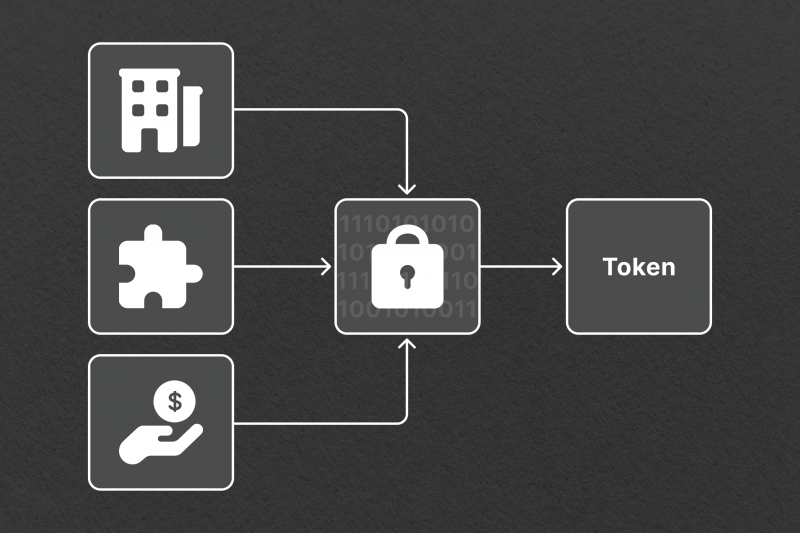
Tokenization is the process of transforming the value of an asset into digital units that can be bought, sold, or transferred on blockchain platforms. For example, a building valued at €10 million can be divided into 10,000 tokens worth €1,000 each. This allows small investors to participate in markets previously reserved for large capital holdings.
Tokenization is not limited to physical assets. It can also be applied to intellectual property rights, futures contracts, carbon credits, or even exclusive experiences.
Tokenization: where real-world economics meets blockchain technology
For a long time, blockchain was almost exclusively associated with cryptocurrencies. Attention revolved around Bitcoin, Ethereum, and speculative projects. Yet behind the scenes, developers, policymakers, and financial institutions were studying a much broader potential: the secure, transparent, and efficient transfer of value without slow processes, expensive intermediaries, or incompatible systems between countries.
Tokenization emerged from this vision. A tokenized asset is a digital, verifiable, and transferable representation of a real asset on a blockchain. Unlike standard cryptocurrencies, whose value fluctuates purely based on supply and demand, tokenized assets are directly backed by real-world value. This means nearly anything of economic worth can be tokenized—real estate, stocks, bonds, commodities, artwork, intellectual property, or contractual rights.
These tokens aren’t mere images or digital certificates—they serve as cryptographic records of ownership, enabling transfer, settlement, verification, and automation in seconds. Instead of relying on paperwork, intermediaries, or manual audits, a blockchain records all transactions immutably and automatically.
This seemingly technical shift enables a profound redesign of the financial system.
Why the revolution has already begun
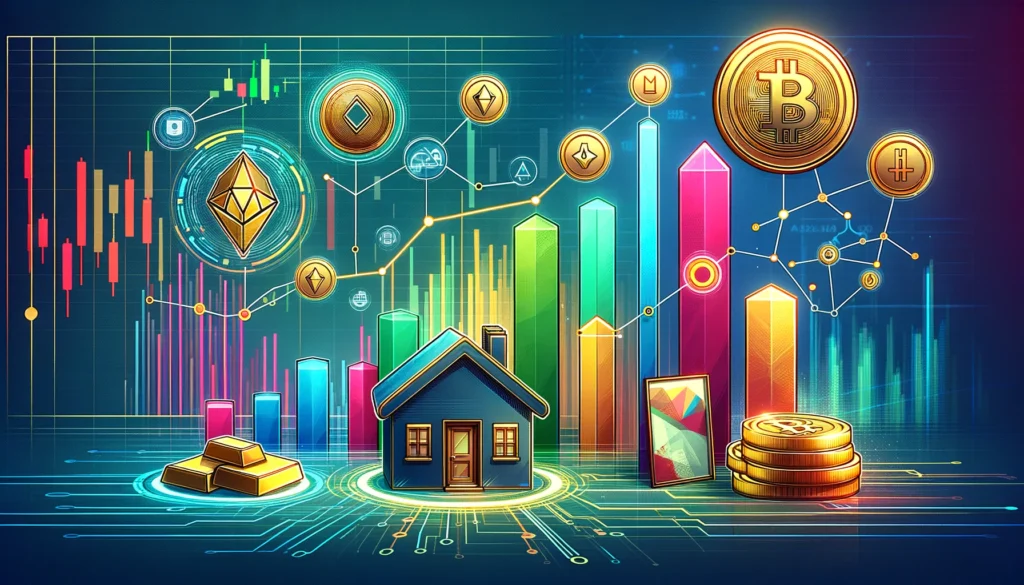
Unlike other technologies that took decades to mature, tokenization is accelerating rapidly due to four driving forces:
1. Global financial institutions are entering the space
Major banks—JPMorgan, Santander, BNP Paribas, Citi—are already issuing tokenized bonds, managing collateral, and executing settlements on blockchain-based systems. Asset managers like BlackRock and Fidelity are shifting billions toward tokenized products.
2. Regulatory clarity is improving
Countries such as the U.S., Switzerland, Germany, Singapore, and the UAE have issued regulatory frameworks to support legally compliant tokenized financial instruments.
3. The technological infrastructure is ready
Modern blockchain networks are faster, cheaper, and more secure, making large-scale financial operations possible.
4. New investment models are in demand
Fractional ownership is opening doors for small investors to access opportunities previously reserved for institutional or ultra-wealthy participants—premium real estate, fine art, renewable-energy projects, or corporate debt.
This combination marks a turning point: tokenization has moved from concept to large-scale implementation.
Economic advantages driving the transformation
The rapid adoption of tokenization stems from a long list of advantages for both markets and investors. Here are the most impactful:
1. Liquidity for typically illiquid markets
Assets such as real estate, fine art, or long-term financial contracts typically require long, complex processes to buy or sell. Tokenization enables 24/7 trading on global digital markets, unlocking liquidity and simplifying participation.
2. Accessible fractional ownership
Perhaps the most disruptive advantage: an asset can be divided into thousands of digital shares, allowing minimal investment amounts. This democratizes markets and expands participation worldwide.
3. Lower operating costs
Because blockchain automates verification and settlement, tokenized transactions eliminate layers of intermediaries—custodians, clearinghouses, notaries—reducing costs substantially.
4. Unmatched transparency and traceability
Every transaction is recorded immutably, reducing fraud, simplifying audits, and improving trust between participants.
5. Smart-contract automation
Dividends, distributions, voting rights, and transfer rules can be encoded directly into the token. This reduces human error and speeds up complex processes.
6. Global market access
Investors can diversify into international assets without lengthy onboarding, cross-border complications, or high barriers to entry.
These benefits aren’t merely improvements—they shift the very architecture of the financial ecosystem.
Sectors adopting tokenization the fastest
Although tokenization can apply to almost any asset, three sectors have taken the lead:
1. Traditional finance (bonds, shares, and funds)
The pillars of global finance are quietly migrating to blockchain. More than 80% of institutional tokenization initiatives launched in 2024–2025 focus on tokenized bonds, as they offer faster settlement, better transparency, and lower operational risk.
The advantages driving adoption include:
- Near-instant settlement
- Reduced intermediaries
- Automated compliance
- Enhanced liquidity for institutional markets
This explains why major funds now manage part of their liquidity using tokenized instruments.

2. Real estate
Real estate stands to experience one of the most profound transformations through tokenization. It enables:
- Fractional ownership of high-value properties
- Easier resale through digital secondary markets
- Automated passive-income distribution
- Faster and more transparent financing
This opens doors for a wider range of investors.
3. Art, music, and intellectual property
Creators and companies are using tokenization to monetize rights, royalties, and licensing. Unlike early speculative NFTs, current models focus on real value, predictable revenue streams, and enforceable ownership rules.
What exactly is changing in the financial system?
Tokenization is not merely a new tool—it is redesigning how markets operate.
Here are the core systemic changes:
– Assets become programmable
Ownership rules and financial flows operate automatically based on code, eliminating manual reconciliation and reducing disputes.
– Settlement times shrink dramatically
Traditional markets settle in days; tokenized markets settle nearly instantly.
– Borders no longer restrict investment
Global diversification becomes simple and low-cost.
– Less friction, more competition
If transferring value becomes as simple as sending an email, financial institutions must offer higher-quality services to stay relevant.
These structural shifts align with broader goals of central banks and global regulators aiming to modernize financial systems.
Challenges ahead: regulation, security, and mass adoption
Even with strong momentum, tokenization still faces hurdles that must be addressed for full maturity:
1. Regulatory fragmentation
Some countries have clear frameworks; others remain restrictive or undefined. Harmonized international standards will be critical.
2. Limited financial education
Many consumers still don’t understand tokenized assets, slowing adoption.
3. Security and custody considerations
Blockchain is secure, but user wallets and platforms require proper protection and responsible operation.
4. Integration with legacy financial systems
Banks and governments must upgrade infrastructure to support digital asset rails at scale.
Despite these challenges, progress is steady and accelerating.
What to expect between 2025 and 2030

All indicators suggest that tokenization will be one of the most influential shifts of the coming decade. Here’s what the next years may bring:
– Fully digital financial markets
Most institutional bonds and structured products will be issued as tokens.
– Tokenized real estate inside traditional banks
Hybrid physical-digital property ownership will become common.
– Programmable money issued by central banks
CBDCs will simplify cross-border interoperability.
– Global democratization of investment
Worldwide access to fractional assets will become the norm.
– Mergers between fintech platforms and banks
Financial services will integrate seamlessly into consumer apps.
– 24/7 secondary markets with deep liquidity
Liquidity will shift from being a privilege to an expectation.
As these changes unfold, tokenization will shift from niche innovation to the backbone of the digital economy.
Conclusion: a new era of ownership and value
The revolution of tokenized assets is no longer theoretical—it is happening now, driven by institutional adoption, technological maturity, and a global appetite for more transparent and inclusive markets.
The coming years will be pivotal. Individuals and businesses that understand and adopt tokenization early will unlock unique advantages in investment, financing, liquidity, and economic growth.
Simply put: tokenization is not just a technological change—it is a new paradigm for how value is created, owned, and exchanged. And like all historic transformations, it is already in motion.